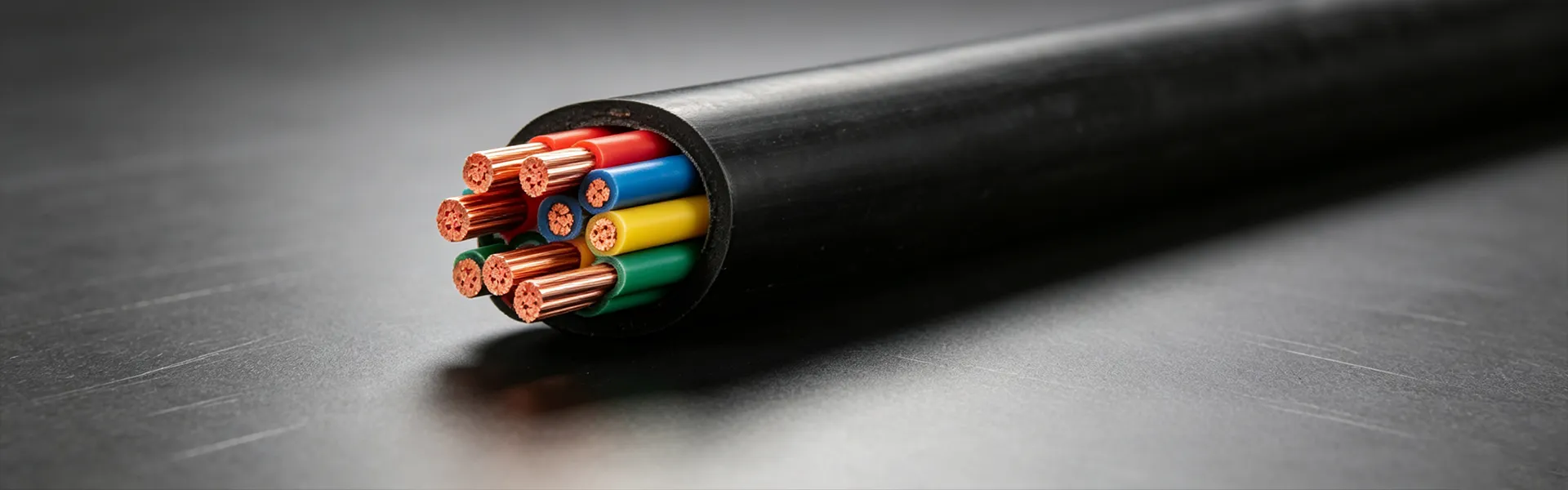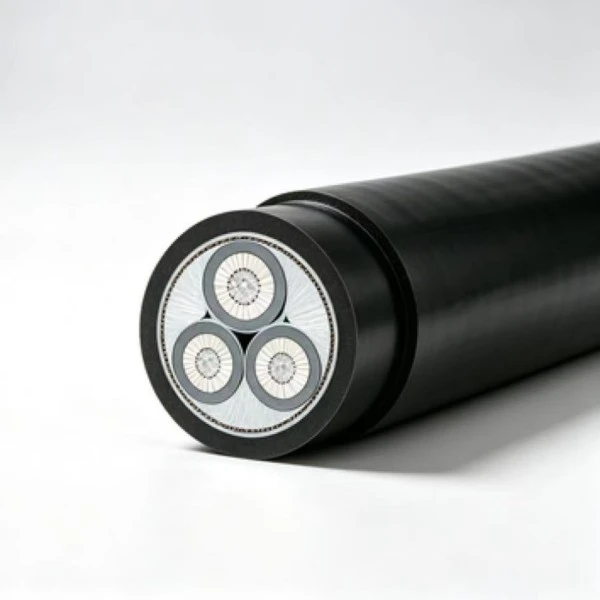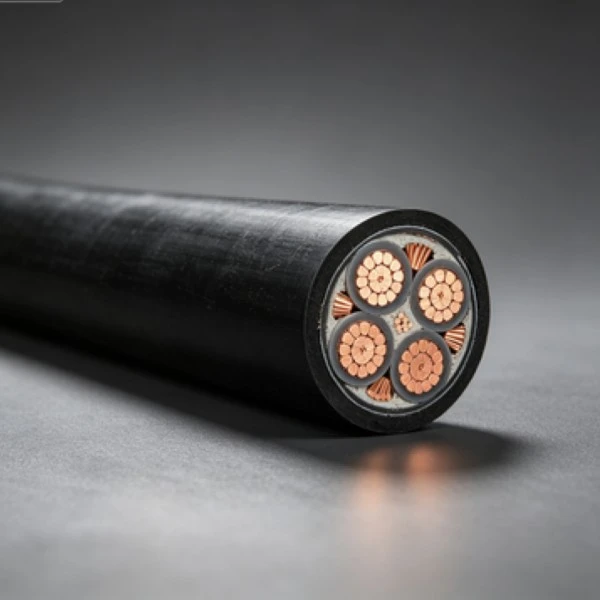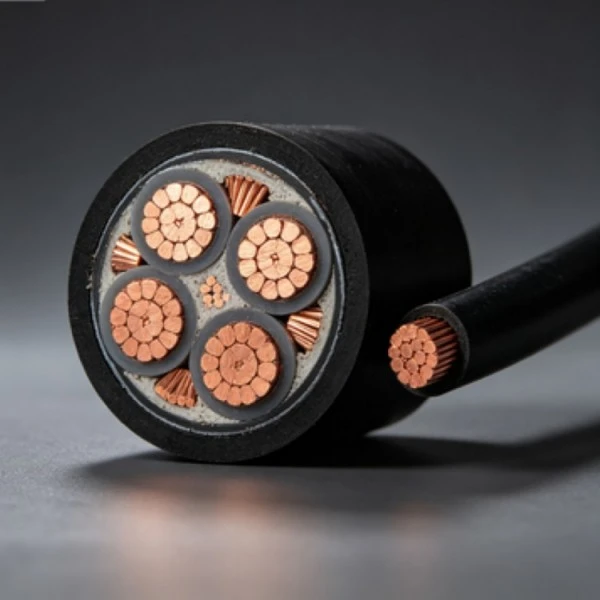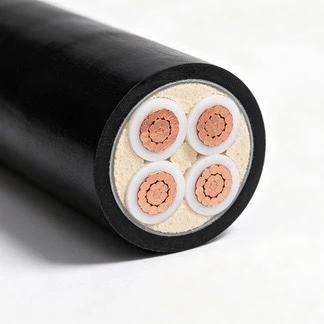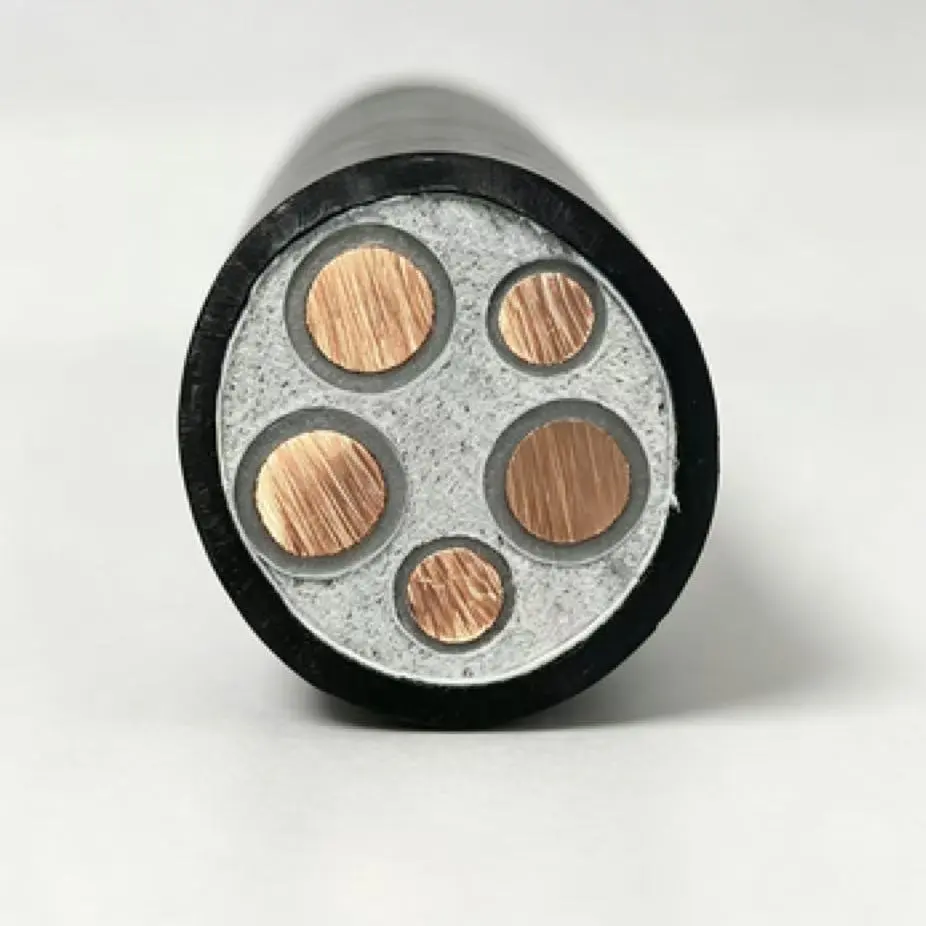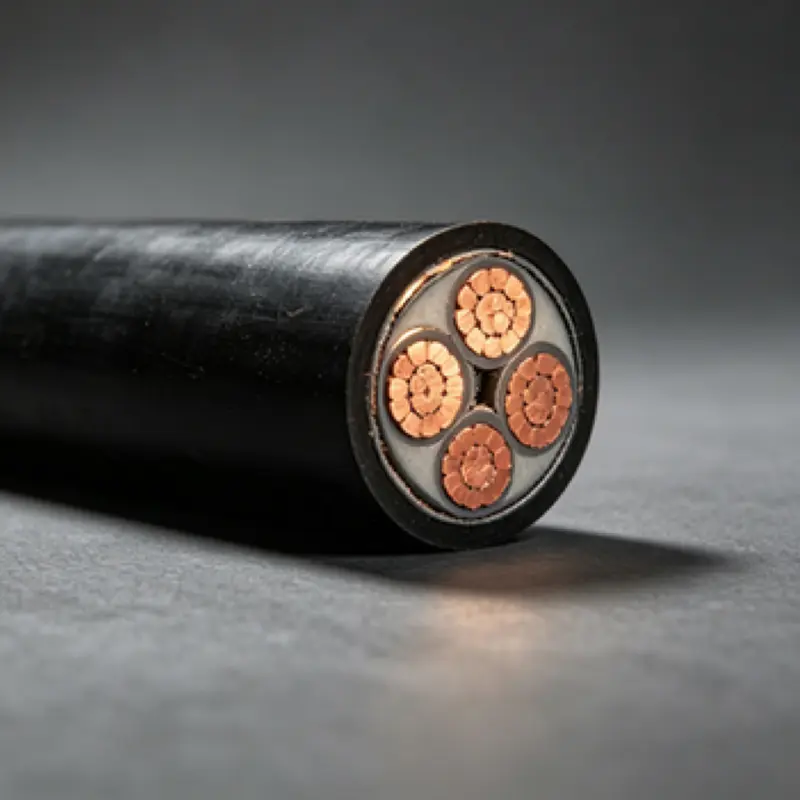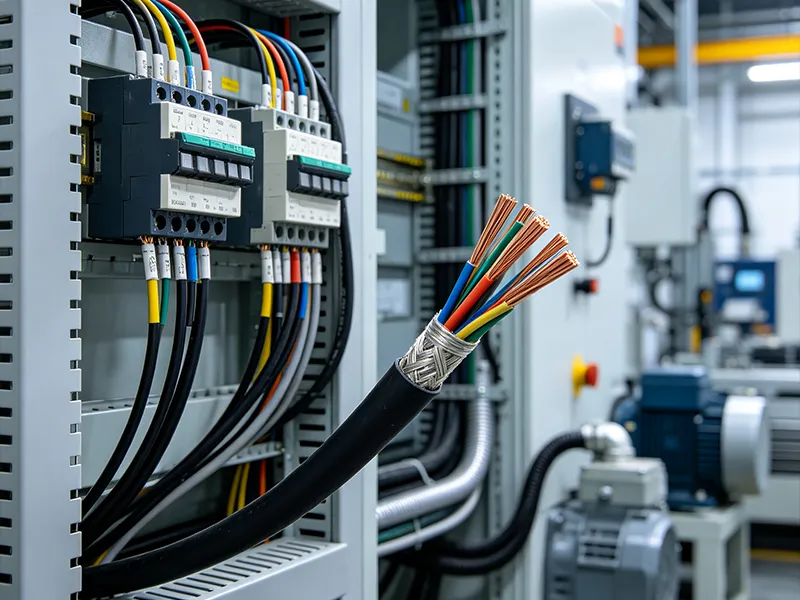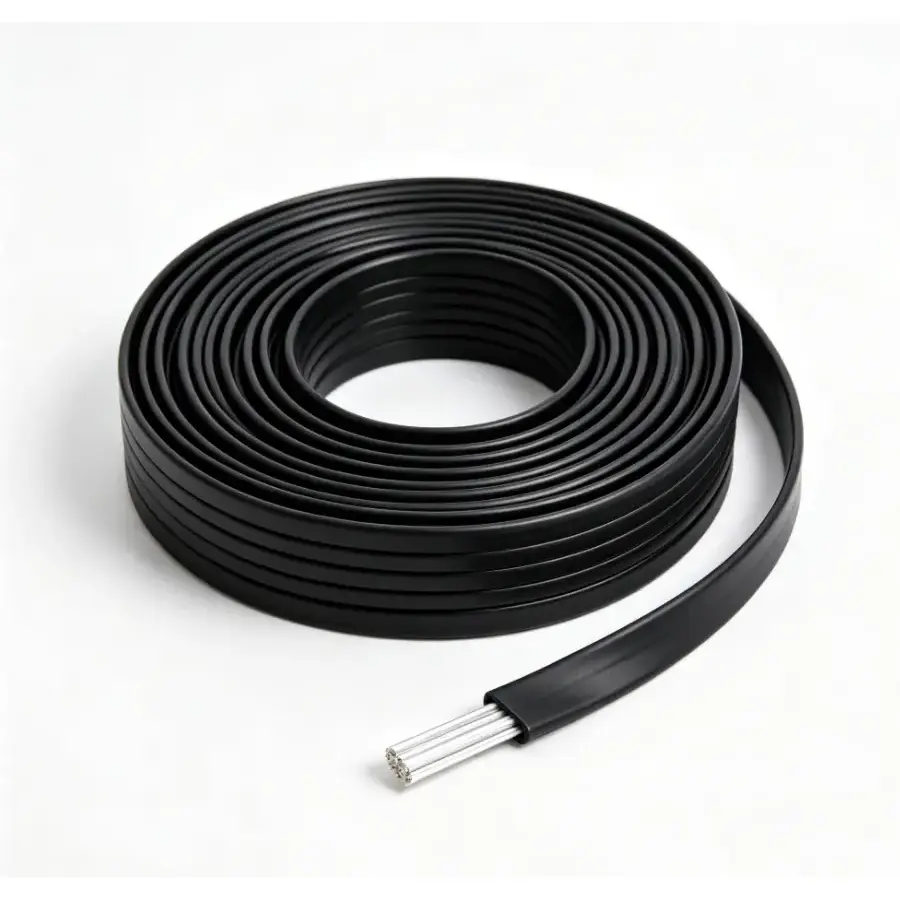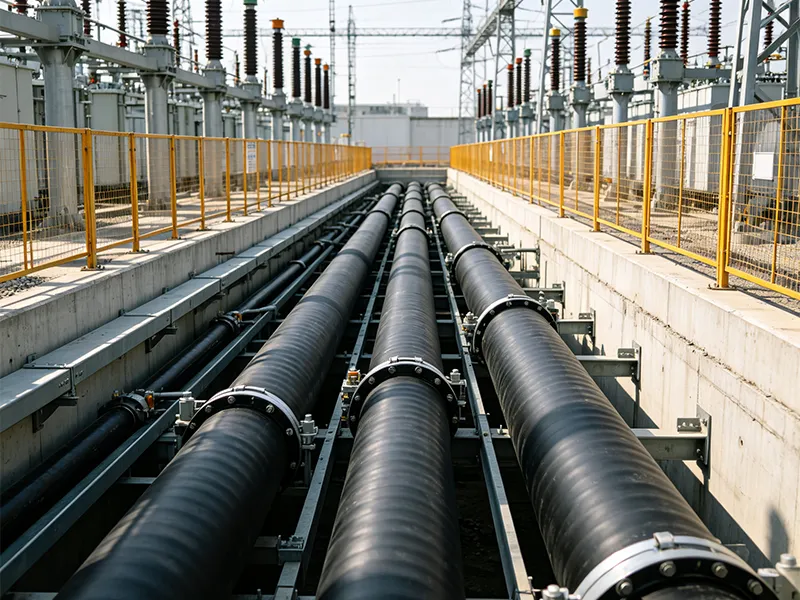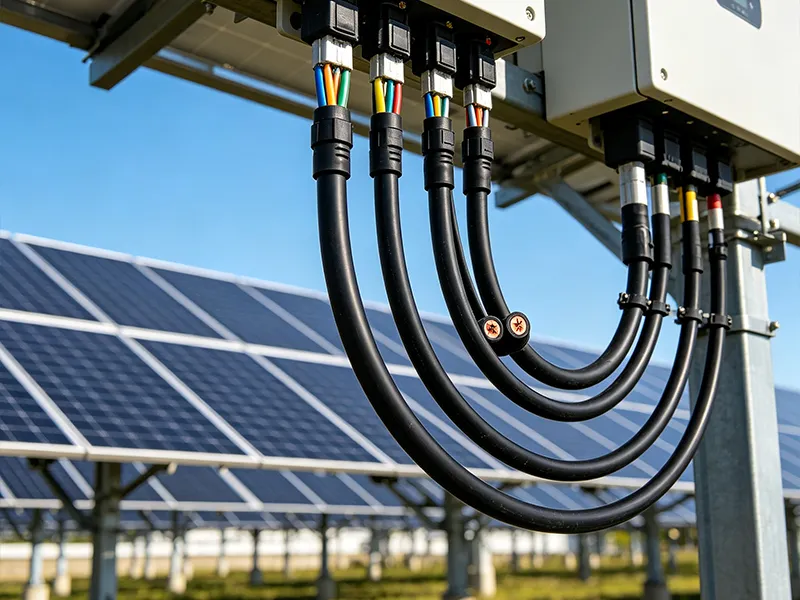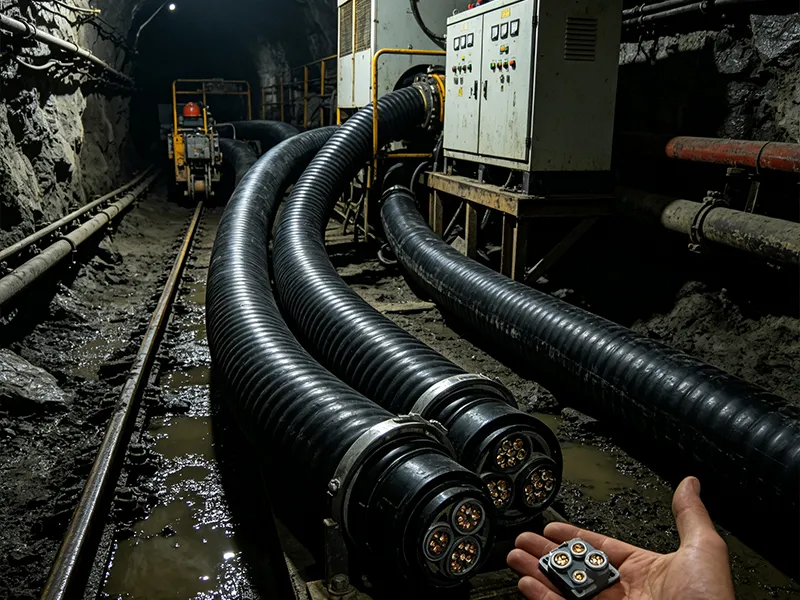
For low-voltage power circuits that need to maintain electrical continuity under specified fire conditions, Copper PVC FR Fire Resistant Low Voltage Power Cable uses a copper conductor with mica fire-resistant protection and flame-retardant PVC insulation and sheathing. The construction is intended for fire-emergency power distribution and other installations where both circuit integrity and flame-spread control are considered in cable selection.
|
Nominal section (mm²) |
Minimum number of conductor wires |
Conductor outer diameter (mm) |
Nominal thickness of PVC insulation /mm |
Approximate outer diameter of insulation/mm |
Maximum conductor resistance at 20 ℃(Ω/km) copper |
|
1.5 |
1 |
1.36±0.02 |
0.8 |
3.2 |
12.1 |
|
1.5(B) |
7 |
1.56±0.02 |
0.8 |
3.4 |
12.1 |
|
2.5 |
1 |
1.75±0.02 |
0.8 |
3.6 |
7.41 |
|
2.5(B) |
7 |
2.01±0.02 |
0.8 |
3.8 |
7.41 |
|
4 |
1 |
2.22±0.02 |
1.0 |
4.4 |
4.61 |
|
4(B) |
7 |
2.52±0.02 |
1.0 |
4.7 |
4.61 |
|
6 |
1 |
2.72±0.03 |
1.0 |
4.9 |
3.08 |
|
6(B) |
7 |
3.09±0.03 |
1.0 |
5.3 |
3.08 |
|
10 |
6 |
3.9±0.10 |
1.0 |
6.1 |
1.83 |
|
16 |
6 |
5.0±0.10 |
1.0 |
7.2 |
1.15 |
|
25 |
6 |
6.1±0.10 |
1.2 |
8.7 |
0.727 |
|
35 |
6 |
7.1±0.10 |
1.2 |
9.6 |
0.524 |
|
50 |
6 |
8.2±0.15 |
1.4 |
11.2 |
0.387 |
|
70 |
12 |
9.8±0.15 |
1.4 |
12.8 |
0.268 |
|
95 |
15 |
11.6±0.15 |
1.6 |
15.0 |
0.193 |
|
120 |
18 |
13.2±0.15 |
1.6 |
16.6 |
0.153 |
|
150 |
18 |
14.6±0.20 |
1.8 |
18.4 |
0.124 |
|
185 |
30 |
16.2±0.20 |
2.0 |
20.4 |
0.0991 |
|
240 |
34 |
18.5±0.20 |
2.2 |
23.1 |
0.0754 |
|
300 |
34 |
20.5±0.20 |
2.4 |
25.5 |
0.0601 |
|
400 |
53 |
23.3±0.20 |
2.6 |
28.7 |
0.0470 |
The conductor is made from copper and is available in solid or stranded constructions according to the listed conductor size. The conductor dimensions and maximum resistance values are provided in the technical table for reference during product selection and inspection.
A mica-based fire-resistant layer is incorporated around the insulated conductor to provide thermal protection during a defined fire exposure. Its function is to help maintain electrical insulation and circuit integrity for the duration specified by the applicable fire-resistance test.
The PVC insulation provides electrical separation between the copper conductor and the external layers. Insulation thickness varies with conductor size, as shown in the product data. Manufacturing control focuses on consistent insulation coverage and the required electrical properties.
The outer sheath provides mechanical protection and contributes to flame-retardant performance. For outdoor, tray or trench installation, the actual environmental conditions should be considered, including temperature, moisture, ultraviolet exposure and mechanical loading.
The Copper PVC FR Fire Resistant Low Voltage Power Cable uses separate functional layers for current transmission, electrical insulation, fire resistance and external protection. This construction allows the cable to be evaluated according to the specific electrical and fire-performance requirements of a project.
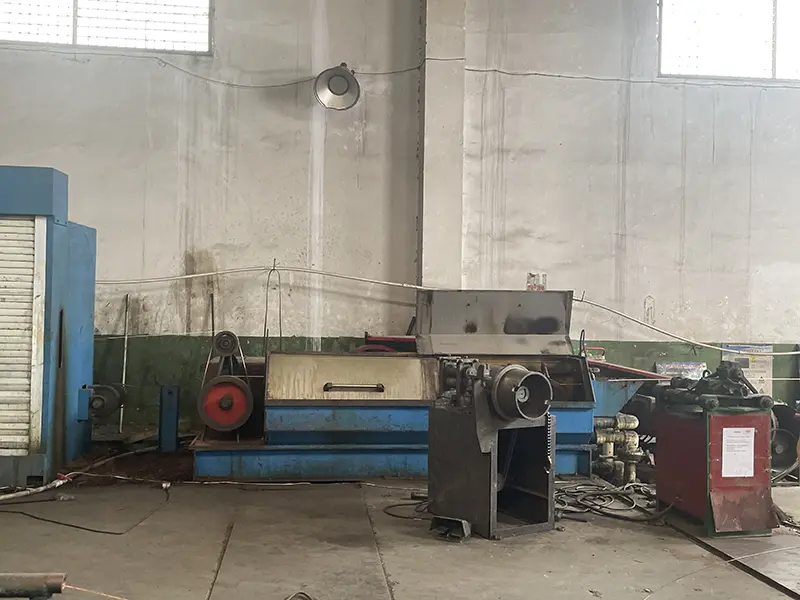
Copper rods are processed through wire-drawing equipment to obtain conductors with the required diameter and electrical properties. Conductor resistance and dimensional requirements are controlled during production according to the ordered specification.

Continuous annealing is used where required to adjust conductor flexibility and relieve internal stress after drawing. Process temperature and line conditions are controlled according to the conductor specification rather than treated as a universal fixed value for every cable construction.
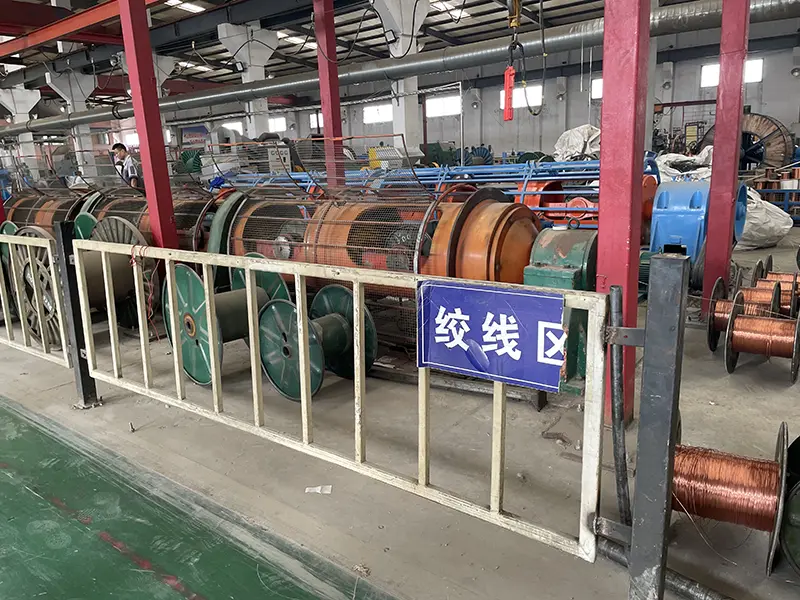
For stranded conductors, individual wires are formed into the specified conductor structure. The stranding process controls lay length and conductor geometry to provide a consistent cross-section for subsequent insulation and fire-resistant-layer processing.
The fire-resistant mica tape is applied around the conductor or insulated core using controlled wrapping tension and overlap. Consistent coverage is important because gaps or damaged sections can affect the fire-resistant layer during subsequent testing.
PVC insulation is extruded around the prepared conductor. Line control includes insulation dimensions, surface condition and electrical integrity. Where specified, on-line spark testing can be used to identify insulation defects during extrusion.
On-line spark testing provides continuous monitoring of insulation integrity during extrusion. Defective sections can be identified and marked for further inspection before the cable proceeds to later manufacturing stages.
For applicable cable constructions, filling materials are used to maintain the intended internal geometry and support the required fire-performance construction. The cabling process is controlled to keep the finished cable dimensions within the specified range.
The flame-retardant PVC outer sheath is extruded over the cable assembly to provide mechanical and environmental protection. Sheath dimensions, surface condition and finished outer diameter are checked against the product specification.
Before dispatch, finished cables can be checked for dimensions, conductor resistance, insulation integrity, voltage withstand and applicable fire-performance requirements. Test records are retained according to the production and order requirements.
Incoming copper rods, mica fire-resistant tape and PVC materials are inspected against the required material and production specifications before use. Relevant incoming inspection records can be retained as part of batch control.
Production inspection covers conductor dimensions, insulation extrusion, mica-tape wrapping, cable geometry and other process parameters relevant to the product construction. Electrical checks are performed at the stages specified by the production and quality-control procedures.
Finished-cable testing can include fire-resistance testing, flame-retardant testing, power-frequency voltage-withstand testing and insulation-resistance testing according to the applicable product specification and project requirements. The verified test conditions and results should be referenced from the corresponding test records.
Production and inspection information can be linked to the relevant cable batch or reel. Where required for project acceptance, supporting test records and traceability information can be provided according to the agreed documentation scope.
The mica fire-resistant layer is intended to help maintain circuit integrity when the cable is subjected to specified fire conditions. Fire-resistance duration is a test result rather than a general operating guarantee, so the applicable test method, temperature, duration and acceptance criteria should be confirmed for each project.
Flame retardancy and fire resistance describe different cable properties. Flame-retardant performance concerns limiting flame propagation under a defined test, while fire resistance concerns maintaining circuit function for a specified period under specified fire exposure. Both requirements should be evaluated separately during cable selection.
PVC insulation provides the primary electrical barrier around the conductor. Uniform insulation thickness and electrical testing are important for maintaining insulation integrity during normal service. The required test voltage and inspection method should follow the product specification and applicable standard.
The Copper PVC FR Fire Resistant Low Voltage Power Cable is therefore selected not only by conductor size, but also by its required fire-performance level, installation environment, load current, voltage-drop requirement and applicable electrical standards.
This cable can be specified for low-voltage power circuits serving emergency lighting, fire pumps, alarm equipment and other fire-safety loads where the project requires fire-resistant cable construction. The final cable type should follow the building design and applicable fire-safety requirements.
In industrial plants, the cable can be used for power circuits in areas where flame-retardant and fire-resistant properties are part of the electrical design. Cable tray arrangement, ambient temperature, grouping and mechanical protection should be considered during installation.
The cable may be used in municipal power-distribution and cable-trench projects where its construction is suitable for the local environmental conditions. Moisture, temperature, mechanical loading and drainage conditions should be reviewed before selecting the installation method.
Indoor cable trays, outdoor overhead installation and cable trenches may be considered according to the cable construction and project requirements. Long-term underwater immersion laying is not recommended for this product unless a construction specifically designed for continuous water exposure is specified.
For cables with PVC insulation, PVC sheath or halogen-free flame-retardant sheath, the ambient installation temperature shall not be lower than 0 ℃. Installation procedures should also account for cable handling and environmental conditions at the work site.
|
Item |
Single-core Cable |
|
Multi-core Cable |
|
|
|
Non-armored |
Armored |
Non-armored |
Armored |
|
Minimum bending radius during installation |
20D |
15D |
15D |
12D |
|
Minimum bending radius near connection boxes and terminals (bending shall be carefully controlled e.g. by forming guide plates) |
15D |
12D |
12D |
10D |
After cable laying completion, a voltage-withstand test shall be performed for 15 minutes at test voltage of 3.5 kV.
For project evaluation, Qiancheng can provide product specifications, available factory test records and other supporting documents according to the ordered cable construction and contract requirements. Customers can submit conductor size, cable length, installation method, required fire-performance level and applicable standards for technical review before production.
For overseas projects, documentation requirements can be confirmed before production so that the relevant product data, inspection records and test documents are prepared with the order. English-language technical documents can be supplied where available and applicable to the specified product.
A: Flame retardancy concerns the ability of a cable to limit flame propagation under a defined test. Fire resistance concerns maintaining circuit integrity for a specified period under specified fire conditions. They are separate performance requirements and should not be treated as interchangeable terms.
A: The mica layer forms part of the fire-resistant construction around the conductor or insulated core. During a specified fire test, it helps protect the insulation and support circuit integrity for the verified test duration.
A: The technical table includes both solid and stranded conductor configurations for certain smaller cross-sections, while larger sizes use stranded constructions. The conductor structure should be confirmed according to the required cross-section and product specification.
A: Selection should consider load current, installation method, ambient temperature, cable grouping, voltage drop and short-circuit conditions. The dimensions and resistance values in the table provide product data, while final sizing should follow the applicable electrical design standard.
A: The specified minimum installation ambient temperature is 0 ℃. The minimum bending radius is 20D for non-armored single-core cable, 15D for armored single-core cable, 15D for non-armored multi-core cable and 12D for armored multi-core cable. More restrictive values apply near connection boxes and terminals as listed in the installation table.
A: According to the supplied installation requirements, a voltage-withstand test shall be performed after laying at 3.5 kV for 15 minutes. The actual test procedure should follow the applicable project specification and electrical safety requirements.
A: Outdoor and cable-trench installation can be considered when the cable construction is suitable for the actual temperature, moisture, UV exposure and mechanical conditions. Long-term underwater immersion is not recommended for this product.
A: Depending on the product configuration and contract, available documentation may include product specifications, factory test records, voltage-withstand test results, fire-performance test reports and batch-related traceability information. Required documents should be confirmed before production.
Address
Qiancheng Cable Co., Ltd., Hengde Industrial Park, Gucheng County, Hengshui City, Hebei Province, China
Tel
Looking for the right cable for a project or application? Send your requirements to Qiancheng Cable for product selection and quotation. You can provide the cable type, voltage rating, conductor material, cross-section, core number, insulation, application and required quantity.
Whether you need standard cables or specification-based production, our team can review your requirements and recommend suitable product options from our manufacturing range.